History’s Habits of Mind
The National Council for History Education (NCHE) believes that historical thinking develops a unique capacity to comprehend human situations, challenges, and interactions. Thinking historically introduces students to the wonders of the past and fosters the ability to make judgments about the present. History’s Habits of Mind articulates this distinctive approach, one that leads towards engaging with and understanding the contemporary world and serves as a foundation for life-long, productive learning and active citizenship.
History’s Habits of Mind
Past Shapes the Present
Grasp the significance of the past in shaping the present.
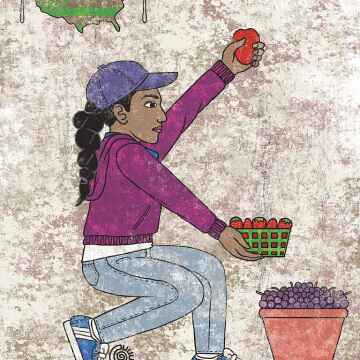
Explore NCHE’s free, open-access materials on Past Shapes the Present designed for any teaching and learning environment.
Past Shapes the Present
Grasp the significance of the past in shaping the present.
Everything that happens in the current moment has roots in the past. We cannot understand the world we live in now without studying the various events and decisions that took place years before. The present is not inevitable — it is built upon an interconnected past.
Questions to consider:
- What is happening in the world right now, and how do those events connect to past individuals, decisions, and events?
- What questions about the past do I need to ask to learn about my present?
- How can I use sources from the past to illuminate the way the present is lived by different individuals and groups?
- How can a shared past lead to different presents for various individuals, groups, and places?
History’s Habits of Mind
Historical Empathy
Perceive past events and issues as they might have been experienced by the people of the time, with historical empathy rather than present-mindedness.
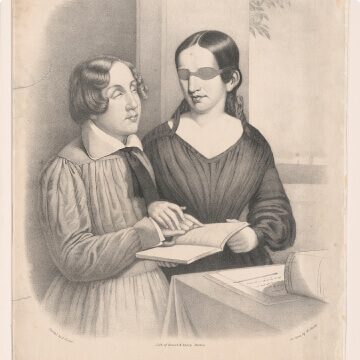
Explore NCHE’s free, open-access materials on Historical Empathy designed for any teaching and learning environment.
Historical Empathy
Perceive past events and issues as they might have been experienced by the people of the time, with historical empathy rather than present-mindedness.
We all bring our lived experience to the table when we study the past. It’s important to analyze history with the tools and knowledge of our present, but exercise caution when applying our current views to historical people’s experiences.
Questions to consider:
- Am I layering my experiences over the experiences of historical people to interpret their actions?
- Am I relying on corroborated sources and multiple perspectives as the primary interpretation of historical people and events?
- What do I need to learn about the context of the time and individuals’ lived experiences?
History’s Habits of Mind
Critical Reading
Read critically, to discern differences between evidence and assertion and to frame useful and appropriate questions about the past.
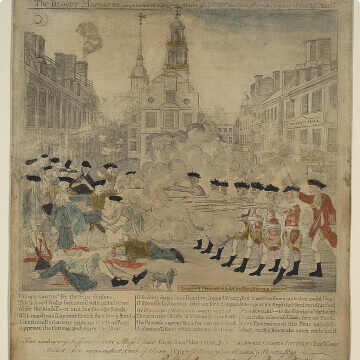
Explore NCHE’s free, open-access materials on Critical Reading designed for any teaching and learning environment.
Critical Reading
Read critically, to discern differences between evidence and assertion and to frame useful and appropriate questions about the past.
Assertion is a confident and forceful statement that someone believes is true. Evidence is something that shows proof. We need to read primary, secondary, and current sources with a critical eye so we can recognize the differences between the two.
Questions to consider:
- Am I reading a statement that is an opinion or belief, but is presented as a fact?
- Does the author provide evidence from reputable sources, or does the author rely on forceful statements to try to convince readers?
- What words does the author use that can be used as clues to understand the meaning intended?
History’s Habits of Mind
Interrogating Sources
Interrogate texts and artifacts, posing questions about the past that foster informed discussion, reasoned debate and evidence-based interpretation.
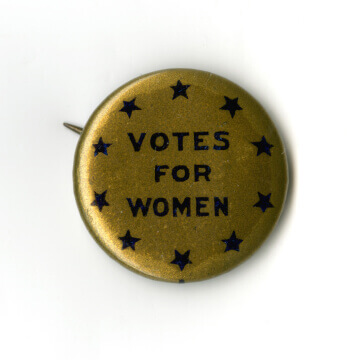
Explore NCHE’s free, open-access materials on Interrogating Sources designed for any teaching and learning environment.
Interrogating Sources
Interrogate texts and artifacts, posing questions about the past that foster informed discussion, reasoned debate and evidence-based interpretation.
Nothing from the past should be taken at face value. Texts and artifacts were created by humans, with a particular purpose or perspective. We need to ask questions that help us understand these human motivations and allow us to discuss with an intention to learn.
Questions to consider:
- Who were the humans who wrote/created/built this text or artifact? What motivated them to do so?
- How does this text or artifact fit reflect its time and place?
- What does this text or artifact, alongside others, reveal about a particular person or event?
History’s Habits of Mind
Evolving Narrative
Recognize that history is an evolving narrative constructed from available sources, cogent inferences and changing interpretations.
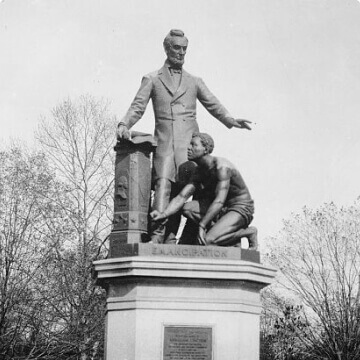
Explore NCHE’s free, open-access materials on Evolving Narrative designed for any teaching and learning environment.
Evolving Narrative
Recognize that history is an evolving narrative constructed from available sources, cogent inferences and changing interpretations.
History is a study of the past. Our studies shift and adapt with new or newly understood evidence. The narrative of past individuals and events can be interpreted differently, but that narrative always stems from clear, logical connections between available historical sources.
Questions to consider:
- How has a particular historical narrative changed over time? What sources led to that change?
- What new or newly understood sources help us interpret in a more nuanced way?
- Is the historical narrative clear and logical and depend on reliable sources, or is it built upon a particular standpoint?
History’s Habits of Mind
Diversity of Cultures
Appreciate the diversity of cultures and variety of historical contexts, as well as to distinguish elements of our shared humanity.
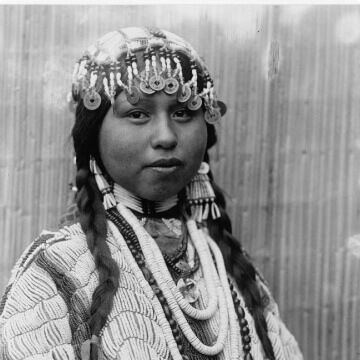
Explore NCHE’s free, open-access materials on Diversity of Cultures designed for any teaching and learning environment.
Diversity of Cultures
Appreciate the diversity of cultures and variety of historical contexts, as well as to distinguish elements of our shared humanity.
Culture is complex. The cultures we grow up in impact the ways we experience events, and the same is true for historical people. We can learn about our culture and others’, now and in the past, while also acknowledging our common human experiences.
Questions to consider:
- What is my culture? How can I learn about cultures that are not my own?
- How does someone’s culture impact the way they experience historical events?
- How do I see elements of my culture and others’ represented in historical narratives?
- How can we find human connections across time, place, and cultures?
History’s Habits of Mind
Understanding Impact
Understand the impact made by individuals, groups and institutions at local, national and global levels both in effecting change and in ensuring continuity.
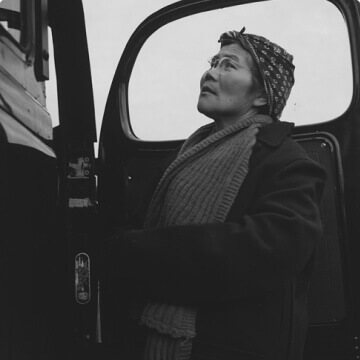
Explore NCHE’s free, open-access materials on Understanding Impact designed for any teaching and learning environment.
Understanding Impact
Understand the impact made by individuals, groups and institutions at local, national and global levels both in effecting change and in ensuring continuity.
Impact of actions can be short-term, long-term, narrow, far-reaching, intended, or unintended. When studying historical and modern impact, it’s important to examine context and remember that nothing in history is inevitable. Impact can be traced back to actions.
Questions to consider:
- What events led to a historical action, and how did that action impact life for people at the time? Is the impact still felt today?
- How do local actions have broader impact? How do national or global actions impact people locally?
- How did historical actions lead to change? How did historical actions ensure continuity?
History’s Habits of Mind
Decisions and Choices
Realize that all individuals are decision makers, but that personal and public choices are often restricted by time, place and circumstance.
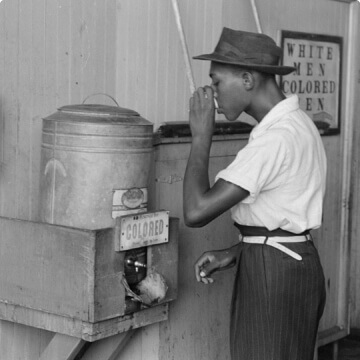
Explore NCHE’s free, open-access materials on Decisions and Choices designed for any teaching and learning environment.
Decisions and Choices
Realize that all individuals are decision makers, but that personal and public choices are often restricted by time, place and circumstance.
The present is built upon decisions made by individuals in the past. These decisions were made with people’s knowledge of their own experiences, the world around them, and an understanding of their power.
Questions to consider:
- What factors impacted an individual’s decision?
- How much power did an individual have to make a decision? Was their decision influenced by others?
- How did an individual’s decision benefit or harm themselves or others?
History’s Habits of Mind
Complex World
Negotiate a complex, often uncertain and ambiguous world, equipped with the appreciation for multiple perspectives.
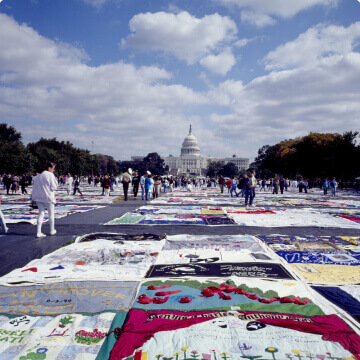
Explore NCHE’s free, open-access materials on Complex World designed for any teaching and learning environment.
Complex World
Negotiate a complex, often uncertain and ambiguous world, equipped with the appreciation for multiple perspectives.
Humans never know what the future holds. We learn about the past with our hindsight but must remember that the uncertainty we feel today was also felt by historical individuals. We approach our complex world with an understanding that our perspective is not the only one.
Questions to consider:
- How can we apply what we learn from the past to our current situation?
- How can we use historical evidence to better comprehend our complex and changing world?
- What perspectives do we need to ensure we include so that we understand complicated topics?
History’s Habits of Mind
Patient Reflection
Engage in patient reflection and constant reexamination of the past and present.
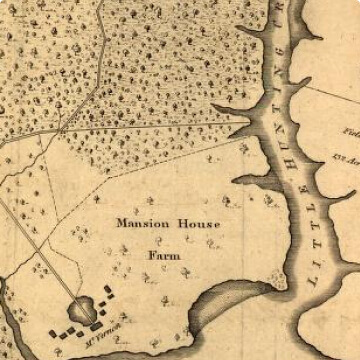
Explore NCHE’s free, open-access materials on Patient Reflection designed for any teaching and learning environment.
Patient Reflection
Engage in patient reflection and constant reexamination of the past and present.
History is full of nuance and cannot be quickly captured in soundbites or glossed over with incomplete interpretations. We need to take time to carefully read sources, corroborate evidence, and think deeply about what we know and why we know it.
Questions to consider:
- What do I think I know about a historical individual or event? Why do I think that and how can I learn more?
- Are there perspectives missing that would create a more complete picture of the past?
- Who has been telling this story? Who needs to be telling this story?
History’s Habits of Mind
List of all History’s Habits Habits of MInd

Explore NCHE’s free, open-access materials on History’s Habits of Mind designed for any teaching and learning environment.
List of all History’s Habits of Mind
- Grasp the significance of the past in shaping the present
- Perceive past events and issues as they might have been experienced by the people of the time, with historical empathy rather than present-mindedness
- Read critically, to discern differences between evidence and assertion and to frame useful and appropriate questions about the past
- Interrogate texts and artifacts, posing questions about the past that foster informed discussion, reasoned debate and evidence-based interpretation
- Recognize that history is an evolving narrative constructed from available sources, cogent inferences and changing interpretations
- Appreciate the diversity of cultures and variety of historical contexts, as well as to distinguish elements of our shared humanity
- Understand the impact made by individuals, groups and institutions at local, national and global levels both in effecting change and in ensuring continuity
- Realize that all individuals are decision makers, but that personal and public choices are often restricted by time, place and circumstance
- Negotiate a complex, often uncertain and ambiguous world, equipped with the appreciation for multiple perspectives
- Engage in patient reflection and constant reexamination of the past and present.